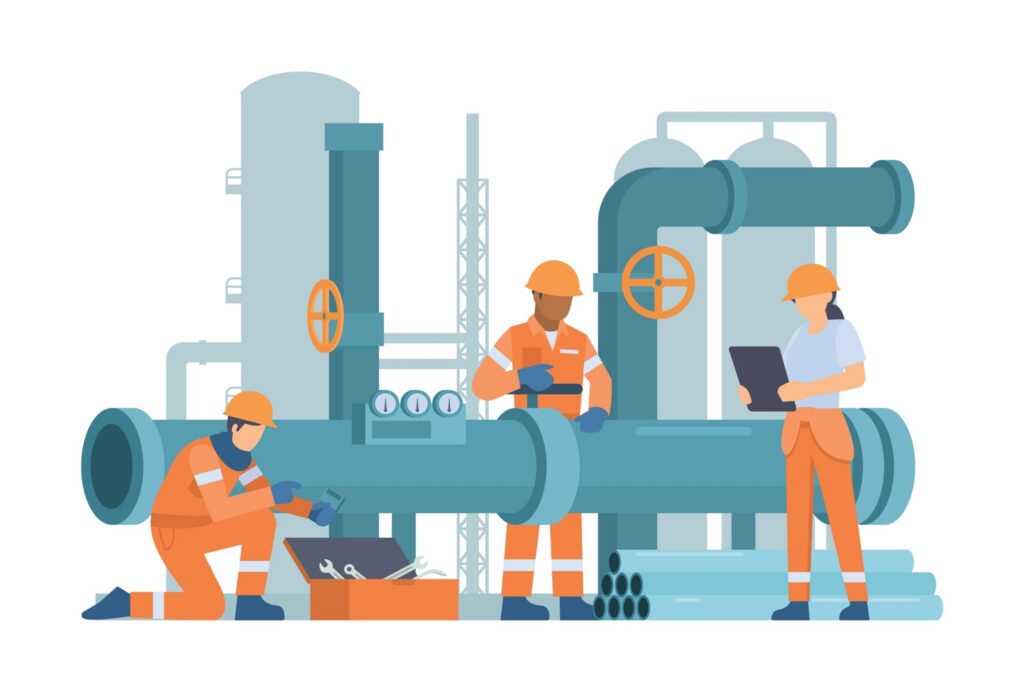
FPP4EU leaflet: Substituting PFAS in Chemical Manufacturing Equipment
A typical European chemical manufacturing plant contains around 20,000 components that rely on PFAS—particularly fluoropolymers—to perform critical functions such as sealing, corrosion protection, insulation and ensuring safe operation under extreme temperatures and harsh chemical conditions.
Across key equipment components like gaskets, O‑rings, pipes, valves, membranes and lubricants, PFAS are used because they uniquely combine chemical resistance, thermal stability, durability, low friction and high purity performance. These properties are essential to maintain operational safety, prevent leaks and contamination, and ensure reliability in highly regulated and demanding industrial processes.
While alternatives are being explored, the Cefic–Accenture study shows that current non‑PFAS options often fall short—offering lower durability, reduced chemical resistance, limited performance ranges or requiring significant redesign and cost. In many critical applications, no viable substitutes currently exist that match the full set of required properties. As a result, substitution needs to be assessed on a case‑by‑case basis.
Read the full summary in the leaflet below.